The Math That Moves Pieces: How Mathster Connect 4 Revolutionizes Connect 4 Strategy
The Math That Moves Pieces: How Mathster Connect 4 Revolutionizes Connect 4 Strategy
When the classic game of Connect 4 hits the stage, every move feels intuitive—until one player glances into the grid and sees more than chance: a pattern governed by mathematics. The Mathster Connect 4 platform demonstrates how deep analytical thinking transforms casual play into calculated strategy. By applying combinatorial logic, probability theory, and pattern recognition, users gain unprecedented insight into optimal decision-making.
This fusion of math and play is not just theoretical—it’s a practical toolkit that reveals hidden winning pathways and deepens understanding of the game’s underlying mechanics.
At its core, Connect 4 is a game of restricted spatial reasoning, where each of the 7 columns offers only 4 vertical positions and 4 horizontal gaps. But beneath this simplicity lies rich combinatorial complexity.
With 28 game pieces placed on a 7x6 grid, the number of possible legal game states approaches 4.35×1031—so vast that exhaustive computation is infeasible. Yet Mathster Connect 4 introduces frameworks that parse this complexity, guiding players toward high-probability moves rather than random guesswork.
Patterns That Defeat Chance: The Power of Combinatorial Mathematics
Mathematically, Connect 4 mimics structural problems in graph theory and network analysis. Each grid cell becomes a node, connected through vertical, horizontal, and diagonal lines of four.To dominate the game, players must anticipate compound connections far ahead. The platform leverages *combinatorial game theory*—a branch of discrete mathematics that evaluates moves by forecasting branching possibilities. By modeling these connections, Mathster Connect 4 identifies dominant patterns linked to wins, blocks, and forced draws.
Take the "overload potential": a configuration where a player poisons an opponent’s future win. Mathster’s system calculates potential paths, flagging moves that create multiple threat vectors. One key insight: every open column enables 4 potential connections—horizontal, vertical, and two diagonals—each expanding strategic influence.
The platform uses *dynamic state evaluation* to score positions by threat density, empowering players to prioritize moves with cascading advantages.
Beyond static patterns, real-time probabilistic modeling plays a pivotal role. Using Bayesian inference, Mathster Connect 4 updates win probabilities dynamically after each move.
For example, if four out of seven columns are partially filled, the chance of completing a vertical win drops—it’s no longer 10%, but mathematically recalculated through position overlap and opponent blocking likelihoods. This shifts play from reactive to predictive.
Real-Time Decision Engines: How Mathster Connect 4 Transforms Gameplay
While experienced players intuitively recognize common setups, Mathster Connect 4 bridges intuition and precision with real-time analytical engines. These engines parse the current board state, reduce it to a weighted graph of move outcomes, and output ranked move sequences ranked by expected utility.Each interior-based recommendation considers:
- Immediate threats: blocking opponent lines before they complete four in a row.
- Future control: securing centermost columns that offer maximum branching factor.
- Occupational dominance: occupying columns that create both offensive and defensive leverage.
- Parity optimization: balancing central and edge placements to deny opponent forced plays.
To further refine choices, Mathster Connect 4 integrates *Monte Carlo simulations*—thousands of randomized continuations that stress-test move validity.
This probabilistic approach uncovers counterintuitive advantages, such as deliberately allowing a temporary




Related Post
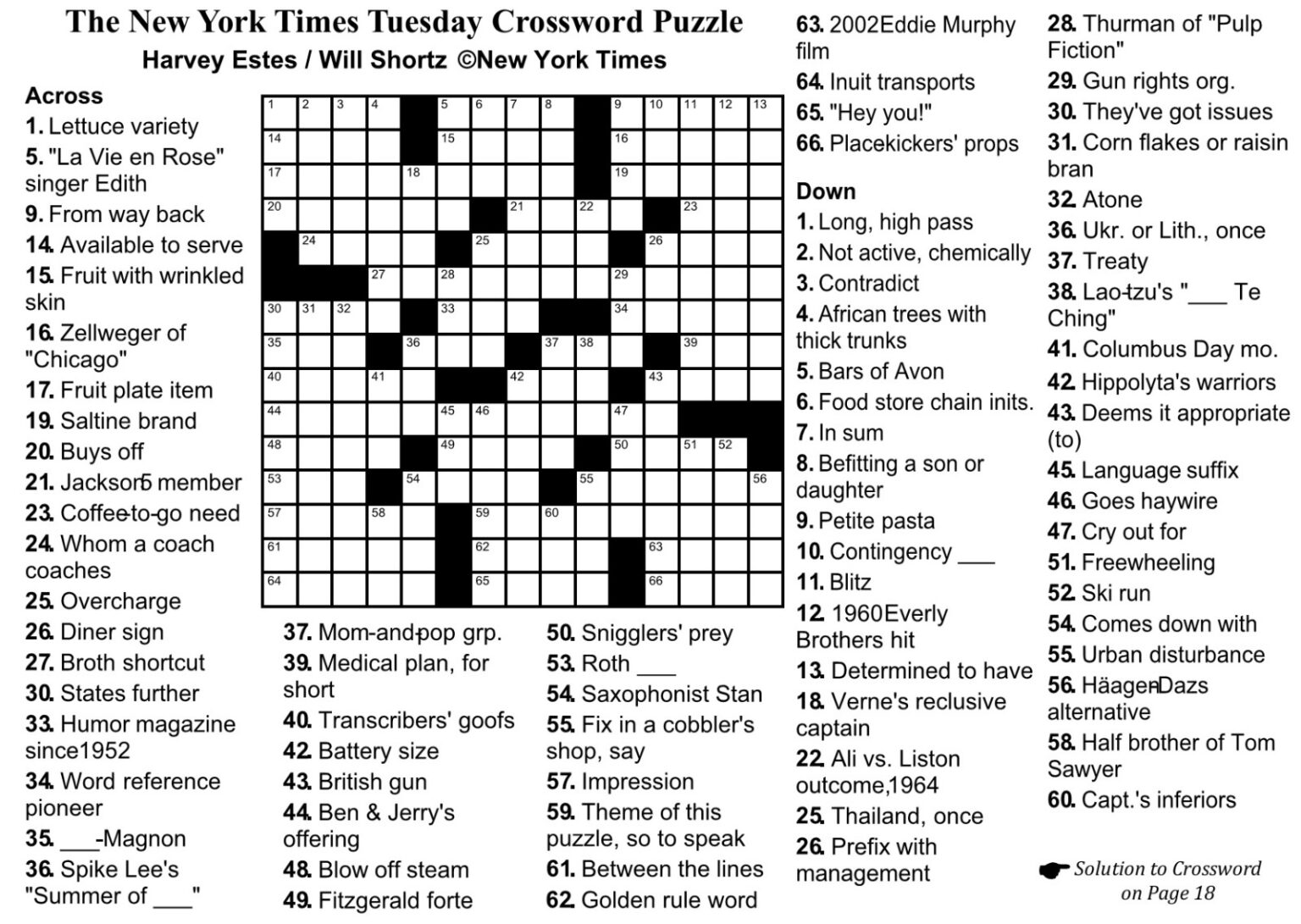
From Seattle WA to New York NY: The Crossword Crossroads That Defined Modern Puzzles

Jackson Hole’s Elevated Edge: How High-Altitude Living Shapes Life in Wyoming’s Premier Mountain Resort

Is Lilli Kay A Transsexual? Unveiling The Truth Behind Public Identity and Personal Transition

HelicopterIoGame: The Immersive Arena Where Real-Time Action Meets Infinite Possibility