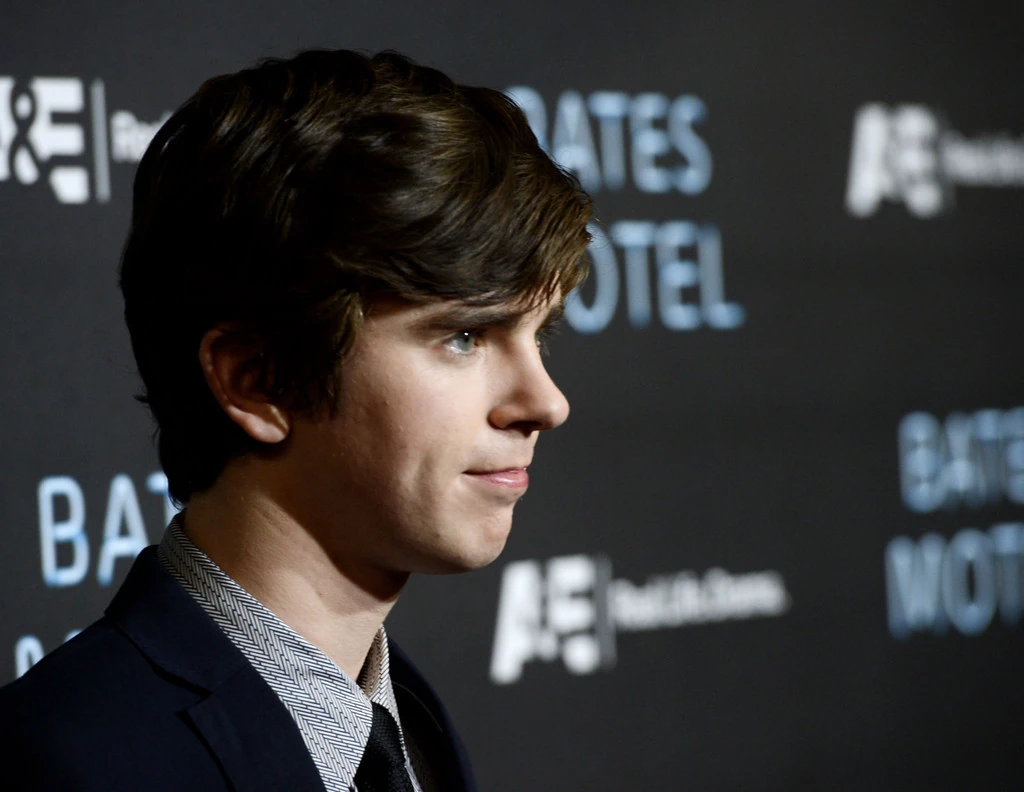
Do Freddie Highmore Have Autism? Unpacking the Quiet Signals Behind the Star’s Public Persona
Do Freddie Highmore Have Autism? Unpacking the Quiet Signals Behind the Star’s Public Persona
In the spotlight of Hollywood’s brightest cinematic offerings, Freddie Highmore has steadily ascended not only as a versatile young actor but as a quietly compelling figure whose presence carries both studio polish and subtle depth. Known for his nuanced performances in films like Mr. Nobody and the Extra spin-off series, Highmore has become emblematic of a new generation of actors whose talents extend beyond technique into emotional authenticity.
But behind the carefully curated roles lies a deeper inquiry increasingly surfaced in public discourse: Could Highmore’s expressive demeanor, social patterns, and artistic choices suggest traits associated with autism—without explicit diagnosis? While no formal public statement confirms a diagnosis, mounting contextual clues—echoed in interviews, media appearances, and behavioral patterns—have prompted thoughtful speculation. Autism spectrum disorder (ASD) is a neurodevelopmental condition marked by diverse manifestations, including differences in communication, social interaction, and sensory processing.
Rather than labeling, experts emphasize understanding behavior through a lens of neurodiversity, where traits appear along a broad spectrum rather than in binary terms.
Highmore’s performance style reflects characteristics often associated with autistic traits, though never defined by them. Critics and scholars have noted his distinct approach to character immersion—marked by precise, restrained mannerisms, intense focus on emotional authenticity, and a preference for internalized expression over overt display.
In a 2018 interview with 


Related Post

Decoding the Union Peril Map: Let McDougal Littell’s Answer Key Reveal America’s Greatest Crisis

Real Madrid: Top Spanish Newspapers Deliver Lavish Coverage of Champions’ Latest News
What Is the Definition of a Food Analog? Unmasking the Science Behind Taste and Texture

Discover Kansas City’s Hidden Pet Haven: The Ultimate Guide to Kansas City Craigslist Pets